Skip to content

A group chat reaches your friends. We reach your community.

Vouch Networks builds community safety apps for hate crime prevention and response. A group chat reaches the people already in it. Our apps reach your whole community: members nearby, your security team and every member of your organization. In an emergency, call 911. Our apps add to that call and never replace it.

Reach is the difference.

When something happens, the people who need to know are rarely the people in your chat. Switch between the two views to see who hears a warning.

See how organizations alert members
Reach of a group chat compared with a community safety appA person in the center sends a warning. In a group chat it reaches six contacts inside a dashed circle. In a community safety app it reaches three wider rings: members nearby, the security team and the whole organization, 60 people in all.

A community safety app

One report reaches members nearby, the security team and, when an admin sends an alert, every member of the organization. All 60 people in this picture hear it.

The smoke alarm problem.

Nobody checks a smoke alarm when there is no fire. Most safety apps have the same problem: they sit unopened until the day they are needed. Vouch Networks apps are where members spend ordinary days, so when an alert goes out, people see it.

  • News with context

    Source counts on every story, plus Intel: a summary, the people and groups named and a read on bias.

  • Creators

    Verified creators publish, host rooms and build a following inside the app.

  • Live audio rooms

    Members and creators talk in real time.

  • Livestreams

    Creators and organizations go live on video, from a talk to a concert.

  • A community map

    Safe spaces and places that matter, not only incidents.

  • Wellness and daily life

    A breathing exercise one tap away, daily reflections and the rhythm of community life.

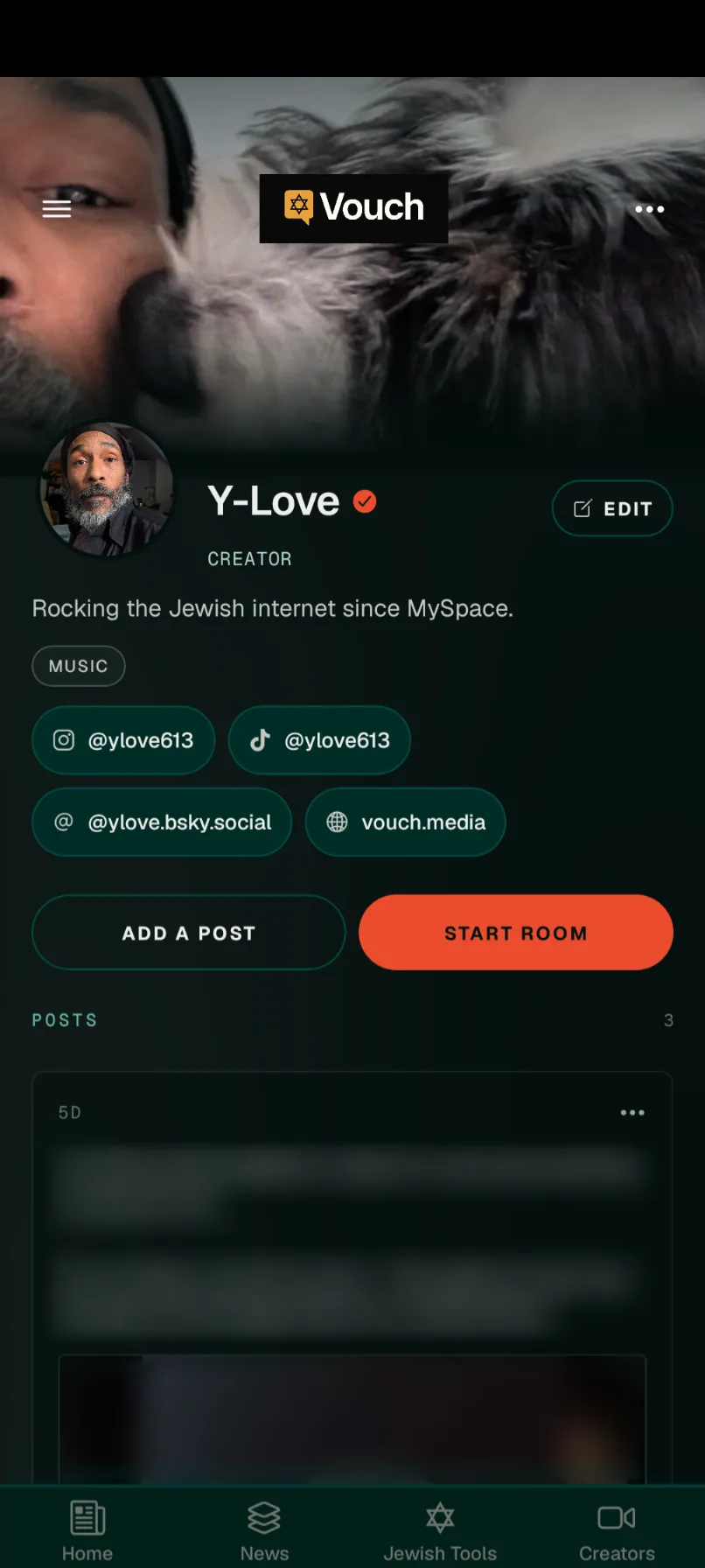
A verified creator page in Vouch with a bio, a music tag, social links, Add a post and Start room buttons, and posts.
Shown: Vouch, our app for the Jewish community.

When to use what.

Every tool here has a job. Emergencies are a job for 911. For everything your community needs to know, here is an honest comparison of group chats, neighborhood apps, email lists and community safety apps.

  • Call 911 in an emergency

    When anyone is in danger or a crime is happening now, call 911, or your local emergency number. No app replaces that call.

  • Use a group chat

    For friends and family, plans and check-ins. It is fast and familiar, and it stops at the people already in it.

  • Use a Vouch Networks app

    For the incidents your community needs to know about, from a slur in passing to being refused service, and after a 911 call in an emergency. It reaches members nearby, your security team and every member of your organization.

Emergencies go to 911.

If anyone is in danger or a crime is happening now, call 911, or your local emergency number. A Vouch Networks app adds to that call and never replaces it: it tells members what happened and what to do while responders do their job.

Most hate incidents never reach that line. A slur in passing, being refused service, hate speech on a flyer. They are rarely police matters, but the rest of your community still needs to know. That is what Vouch Networks apps are for.

How Vouch Networks apps compare with group chats, social and neighborhood apps, and email and text lists

  • Reaches beyond your contacts

    Members nearby, the security team, the whole organization.

    Vouch Networks apps
    Yes
    Group chats
    NoOnly people in the group. Up to 1,024 on WhatsApp, 1,000 on Signal.
    Social and neighborhood apps
    YesAnyone nearby, verified or not
    Email and text lists
    NoOnly people on the list, wherever they are
  • Something members open every day

    People see an alert in an app they already use.

    Vouch Networks apps
    YesNews, creators, live rooms, maps and daily life
    Group chats
    YesFor friends, family and plans
    Social and neighborhood apps
    YesFor local chatter
    Email and text lists
    NoOpened when something arrives, if at all
  • Verified members

    You know who is reading and who is posting.

    Vouch Networks apps
    YesInvite-only membership
    Group chats
    NoAnyone an admin adds
    Social and neighborhood apps
    NoOpen sign-up
    Email and text lists
    NoAnyone with the sign-up link
  • Structured incident reports

    What happened, where, when, with photos.

    Vouch Networks apps
    Yes
    Group chats
    NoMessages scroll away
    Social and neighborhood apps
    NoFree-form posts
    Email and text lists
    No
  • Alert all members at once

    Vouch Networks apps
    YesAdmins alert everyone in seconds
    Group chats
    NoOne group at a time
    Social and neighborhood apps
    No
    Email and text lists
    YesOften read hours later
  • Map of incidents and safe spaces

    Vouch Networks apps
    Yes
    Group chats
    No
    Social and neighborhood apps
    NoCrime maps, not safe spaces
    Email and text lists
    No
  • Report once

    One report instead of a different form for every group.

    Vouch Networks apps
    Yes
    Group chats
    No
    Social and neighborhood apps
    No
    Email and text lists
    No
  • No fear feed

    No endless scroll of crime near you.

    Vouch Networks apps
    Yes
    Group chats
    Yes
    Social and neighborhood apps
    NoCriticized by advocacy groups for fear and profiling
    Email and text lists
    Yes

Group limits are from WhatsApp1 and Signal2. Social and neighborhood apps include Citizen and Nextdoor. Advocacy groups have criticized neighborhood apps for racial profiling in posts (2021)3, and in 2021 a Citizen manhunt targeted the wrong man (reported 2023)4. These are past criticisms, not a description of current policy.

Hate reaches every community.

Reported hate crimes fell in 2025, and the numbers are still high. Most victims never report to police at all, so the real count is larger.

10,8815

hate crime incidents reported to the FBI in 2025, with 13,438 victims. Down from 11,679 in 2024.

FBI data via DOJ, 2025

42%6

of violent hate crime victimizations were never reported to police, 2015 to 2019. Many never reach an official count.

BJS survey data via CRS, 2025

1,0427

anti-LGBTQ incidents tracked across 47 states and Washington, DC in 2025.

GLAAD ALERT Desk, 2026

Who is targeted, by share of victims in single-bias incidents in 2025:

Race, ethnicity or ancestry
55.6%
Religion
22.9%
Sexual orientation
14.5%
Gender identity
4.6%

FBI data via DOJ, 2025. Disability and gender make up the rest.

What changes on the day.

Four ordinary situations, before and after your community has one place to report and alert. When someone may be in danger, the first call still goes to 911 or the police. When no one is, the app is where it gets reported.

  1. Hate graffiti at a community center

    Today
    A staff member finds a swastika spray-painted by the side entrance at 7am and calls 911. While they wait for an officer, parents arrive for drop-off. Nobody has read the email or the group chat, so families walk right past it. By noon it is painted over, and nobody beyond the building knows a hate group may be active nearby.
    With a Vouch Networks app
    The staff member calls 911 and reports it in the app with photos while they wait for police. The security lead and members nearby know within seconds, and parents are sent to the front entrance. The report stays on the community map, so if it happens again three blocks away, everyone can see it is not a one-off.
  2. Harassment near a campus

    Today
    A student is followed and shouted at two blocks from campus. They call 911, get home safe and text a few friends. Other students walking the same route that evening have no idea.
    With a Vouch Networks app
    The student calls 911 and gets somewhere safe. Once they are home, they report it in the app in under a minute. Members nearby get a heads-up to avoid the block, the student group admins see it, and the student reports once instead of hunting for the right form.
  3. A suspicious package at a house of worship

    Today
    An usher spots an unattended bag by the door before a service and calls 911. Police clear the building and close the street. Nobody tells the house of worship next door or the school across the street, and anyone who saw who left the bag has no idea it matters.
    With a Vouch Networks app
    The usher calls 911 first. An admin then alerts every member in seconds: stay away from the north entrance and follow staff directions. Members nearby, including families at the school across the street, get a heads-up too. A member who saw someone leave the bag reports it right in the app, from where they stand. No number to look up and no waiting to flag down security, so the security team has it before police arrive.
  4. Refused service at a local store

    Today
    A father and his son are refused service at a pharmacy and told to shop somewhere else. Nobody is in danger, so it is not a 911 call, and the police are unlikely to take it up. He tells a few friends and moves on. The next family walks into the same store with no warning.
    With a Vouch Networks app
    He reports it in the app in under a minute: what happened, where and when. Members nearby see it on the community map, and the report stays on record. If it keeps happening at the same store, the whole community can see it, and he reported it once instead of hunting for the right form.

Report once. We handle the rest.

You should not have to learn which form goes to which organization while you are still shaken. Report it once in the app. Behind the scenes, we build relationships with community and civil rights organizations so your report can reach the people who can help.

Questions people ask

Is a community safety app better than a WhatsApp group?

For friends and family, a group chat works. For a whole community, it falls short. WhatsApp groups stop at 1,024 people and Signal groups at 1,000, nobody is verified, and warnings scroll away. A community safety app adds verified members, structured reports, a shared map and alerts that reach every member.

Why would anyone open a safety app on a normal day?

Most people would not, and that is the problem with most safety apps. Vouch Networks apps are built for ordinary days too. In Vouch, our first app, members read the news with source counts and Intel analysis, follow verified creators, join live audio rooms and livestreams, check the community map and take a breathing break. Because they open it every day, they see an alert when one goes out.

Should I report a hate crime to the police or in an app?

Both, in that order. If anyone is in danger, call 911, or your local emergency number, first. Then report to local police so the crime is on record. A Vouch Networks app adds what a police report cannot: it warns your community, reaches your security team and lets you report once instead of filling out many forms.

What if it is not an emergency or a crime?

Report it in the app. Most hate incidents never reach 911: a slur in passing, being refused service, hate speech on a flyer. Police rarely take those up, but the people around you still need to know. A report tells members nearby, puts it on the community map and stays on record, so if it keeps happening, everyone can see it.

What does hate crime prevention look like for a community?

It means seeing trouble early and acting together. Members raise a concern before it becomes an emergency, a security team checks it, and admins alert everyone when it matters. Structured reports build a shared record, so repeated vandalism at one site is not lost in a chat thread.

Do Vouch Networks apps replace 911 or security staff?

No. Our apps inform and coordinate. They supplement, and never replace, security professionals and emergency services. In an emergency, call 911 in the US and Canada, or your local emergency number. Then use the app to tell your community and your security team what is happening.

Which communities do Vouch Networks apps serve?

Every community targeted by hate: houses of worship, LGBTQ+ centers, cultural and immigrant organizations, schools and campuses, and advocacy groups. Vouch, our first app, serves the Jewish community. Pryde, for LGBTQ+ communities, is in development. For other communities, we build on the same foundation, together with you.

What is the difference between a hate crime and a hate incident?

A hate crime is a crime, such as assault, threats or vandalism, motivated by bias against who someone is. A hate incident is a biased act that is not a crime, such as slurs or hateful flyers. Both are worth telling your community about. Our guide to reporting a hate crime explains each step.

Sources

  1. 1.WhatsApp Help Center, How to add and remove group members (opens in a new tab). Checked October 2026
  2. 2.Signal Support, Group chats (opens in a new tab). Checked October 2026
  3. 3.Surveillance Technology Oversight Project (advocacy group), The Spy Next Door (opens in a new tab). 2021. Criticism of racial profiling in neighborhood app posts.
  4. 4.TechCrunch, Crime-reporting app Citizen lays off 33 employees (opens in a new tab). January 12, 2023. Recounts the 2021 manhunt in which the person the app identified was the wrong man.
  5. 5.U.S. Department of Justice, Hate Crime Statistics, 2025 (FBI Uniform Crime Reporting data) (opens in a new tab). Data for 2025, published August 14, 2026. Bias shares are of victims in single-bias incidents. The 2024 total was 11,679.
  6. 6.Congressional Research Service, Report R46318, citing BJS, Hate Crime Victimization, 2005-2019 (National Crime Victimization Survey) (opens in a new tab). December 16, 2025. Violent hate crime victimizations, 2015 to 2019.
  7. 7.GLAAD, ALERT Desk, Pride Facts (opens in a new tab). Data for 2025, published January 2026. Up from 984 incidents in 2024.